



There is a particular kind of excitement that comes with unboxing a new skincare product, whether it is a serum everyone has been talking about or a moisturiser that promises to sort out dry patches for good. The instinct is to try it straight away, smoothing it across the whole face to see results as soon as possible.
Dermatologists advise against this. Before a new product touches the face, it deserves a small trial run elsewhere on the body first, known as a patch test for skincare, which takes only a few extra days and is the simplest way to try new skincare products safely.
Key Takeaways
Here is what to know before trying a new product for the first time:
- A patch test means applying a small amount of product to a hidden area of skin, such as the inside of the arm, before using it on the face.
- Even well-formulated skincare products can irritate sensitive skin.
- Allergic reactions can be delayed by several days, so patience matters more than speed.
- Wash-off products need only a short test, while leave-on products need a full 24 hours.
- Redness, itching, burning, or raised bumps are all signs to stop using a product.
- Labels marked 'hypoallergenic' and 'fragrance-free' are an easy way to lower the risk of a reaction.
Why You Need to Patch Test New Skincare Products at Home
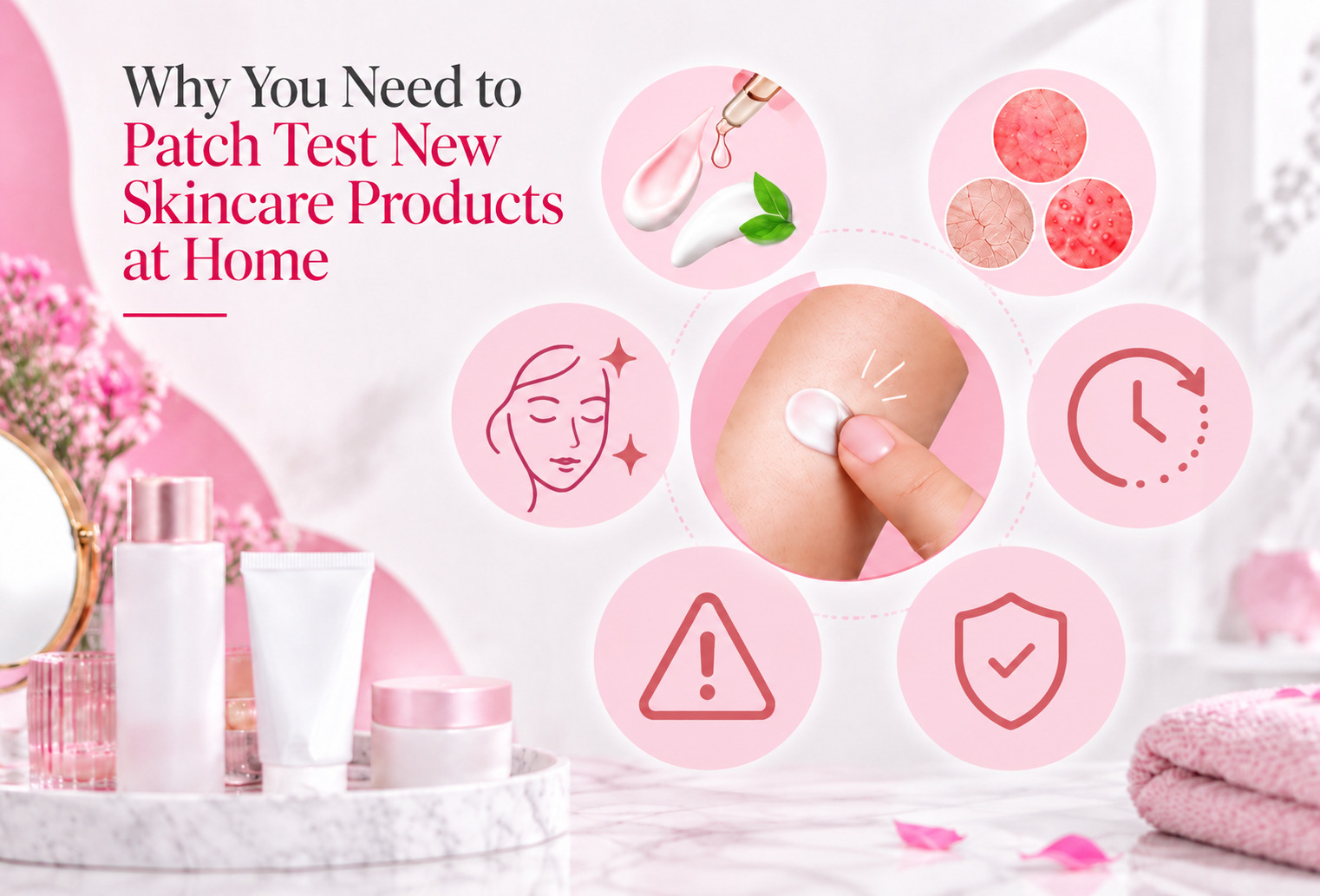
Skin reacts differently from one person to the next, and a product that suits a friend or a favourite reviewer online will not necessarily suit everyone else. Formulas contain active ingredients, fragrances, preservatives and emulsifiers, and any one of these can trigger a reaction in someone with sensitive skin, regardless of how well-known the brand is.
Even premium, dermatologist-developed ranges can cause irritation in the wrong combination of skin and ingredient, which is why testing on a small area first before using a new skincare product on your face is worth the extra step.
A patch test at home helps you understand how your skin reacts to specific ingredients before they come into full contact with your facial skin. This simple step can help prevent unnecessary skin irritation and identify possible allergens before they become a bigger concern.
Contact Dermatitis vs. Normal Skin Reaction
Allergic contact dermatitis is a true allergy. The immune system identifies an ingredient, often a fragrance, preservative or specific active, as a threat. Reactions can be delayed by several days and tend to show up as itching alongside redness and swelling.
Irritant contact dermatitis is more common and is not an allergy at all. It happens when a strong ingredient, such as retinol, an exfoliating acid or a high concentration of vitamin C, disrupts the skin barrier directly. It appears quickly, feels more like stinging or burning than itching, and usually settles once the product is removed.
Recommended product: DR.ALTHEA Vitamin C Boosting Serum
How to Perform a Patch Test at Home (Step-by-Step)
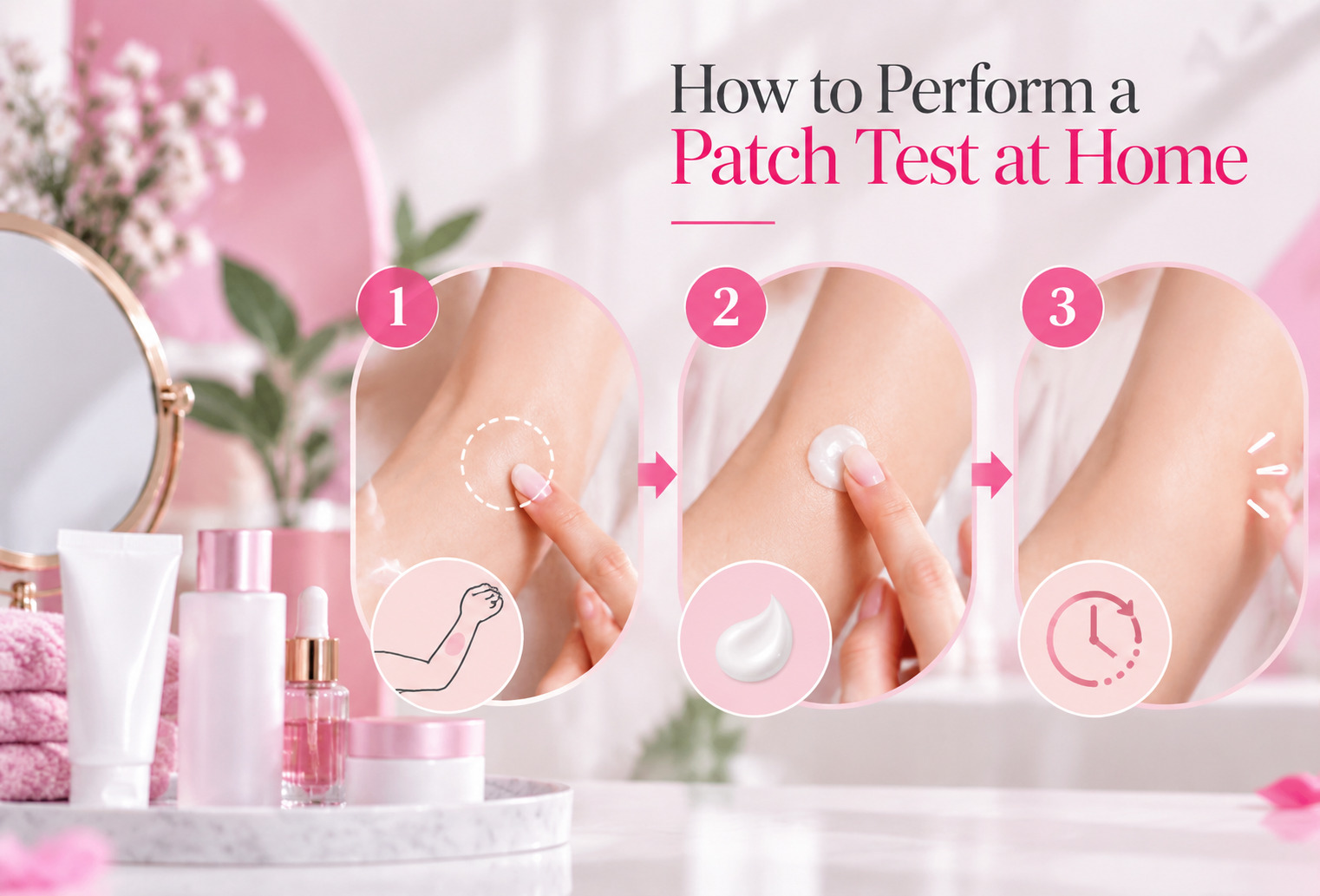
Performing a patch test at home is a simple way to check whether a new skincare product works well with your skin before adding it to your regular routine. A proper patch test involves applying a small amount of product to a limited area of skin and observing how your skin tolerates the formula over time.
Step 1: Choose a Hidden Skin Patch Area
Pick a spot that is easy to keep covered and check on, such as the inside of the arm, the bend of the elbow, the inner elbow, or the area behind the ear along the jawline. These spots have skin similar to the face, making them a fair test while still being easy to hide if a reaction appears.
The goal is to choose a small area of skin where you can clearly monitor any changes. Testing a hidden area first allows you to identify whether a specific product or ingredient may cause an allergic reaction before applying it across your face.
Step 2: Apply the Skincare Product
Cleanse the area first, then apply a small, dime-sized amount of the skincare product to clean, bare skin. There is no need to spread it out or apply a thick layer, since the goal is to test the ingredients rather than cover a large surface area.
When testing skincare products, avoid combining multiple new products at the same time. This makes it easier to identify which product may cause irritation or a skin reaction if one occurs.
Step 3: Wait and Monitor for an Allergic Reaction
Leave the area alone and check on it over the next 24 to 48 hours. Some reactions show up straight away, but allergic reactions can take longer to develop, so rushing this step defeats the purpose.
Avoid washing or applying anything else to the tested area during this window. The results of patch testing are easier to understand when the tested product remains the only factor affecting the skin.
If you experience redness, itching, swelling, burning or discomfort, stop using the product immediately. These signs may indicate that your skin is sensitive to certain ingredients or that the formula does not suit your skin type.
How to Patch Test Different Types of Skin Care Products

Not every product needs to be tested the same way, since a rinse-off cleanser behaves differently on the skin than a serum that stays on all day.
Many skin care products contain active ingredients designed to improve specific concerns, but these ingredients can sometimes cause irritation, especially when introduced too quickly. Patch testing helps you understand how your skin tolerates a product before making it part of your skincare routine.
Wash-Off Products (Cleansers and Masks)
Apply the product to the patch area, leave it on for about 5 minutes, then rinse it off. Check the area straight away and again over the next few hours for any redness, tightness or stinging that does not settle.
Even though wash-off products have shorter contact with the skin, they can still cause a reaction if they contain ingredients that do not agree with your skin.
Leave-On Products (Serums, Toners, and Moisturisers)
Products that stay on the skin need a longer test. Apply a small amount and leave it undisturbed for a full 24 hours before deciding whether the skin has accepted it well.
Leave-on skincare products remain in contact with your skin for longer periods, meaning ingredients such as acids, retinol, or fragrances may have more time to trigger irritation or an allergic reaction.
Recommended Product: HARUHADA Brightening Skin Serum
Recognising Symptoms of a Skin Reaction

Knowing what to look for makes it easier to catch a reaction early. Watch out for:
- Redness or a flushed appearance on and around the tested area
- Persistent itching that does not fade after a few minutes
- A burning or stinging sensation, particularly with active ingredients such as retinol or acids
- Small raised bumps, sometimes resembling a mild rash
- Dryness, flaking or a tight feeling in the skin
- Swelling of the tested area
A positive patch test result does not always mean you have a serious allergy, but it does indicate that the product may not be suitable for your skin.
A skin reaction can happen because your skin is sensitive to a particular ingredient, known as an allergen. Common allergens in cosmetics may include fragrances, preservatives or certain active ingredients.
What to Do If You Are Allergic to a New Product
If any of these symptoms appear after testing a new skincare product, wash the area immediately with lukewarm water and a gentle, fragrance-free cleanser. Follow this with a soothing, fragrance-free cream containing aloe vera or ceramides to calm the skin barrier, and stop using the product.
A reaction may happen because your skin does not tolerate a specific ingredient, or because the formula contains an allergen that triggers sensitivity. Avoid using the product again until you understand the cause of the skin reaction.
If swelling is severe or symptoms do not improve within a day or two, it is worth speaking to a doctor or dermatologist. A professional can help determine whether the reaction is related to an allergy, irritation, or another underlying skin condition.
When to See a Dermatologist for a Professional Patch Test
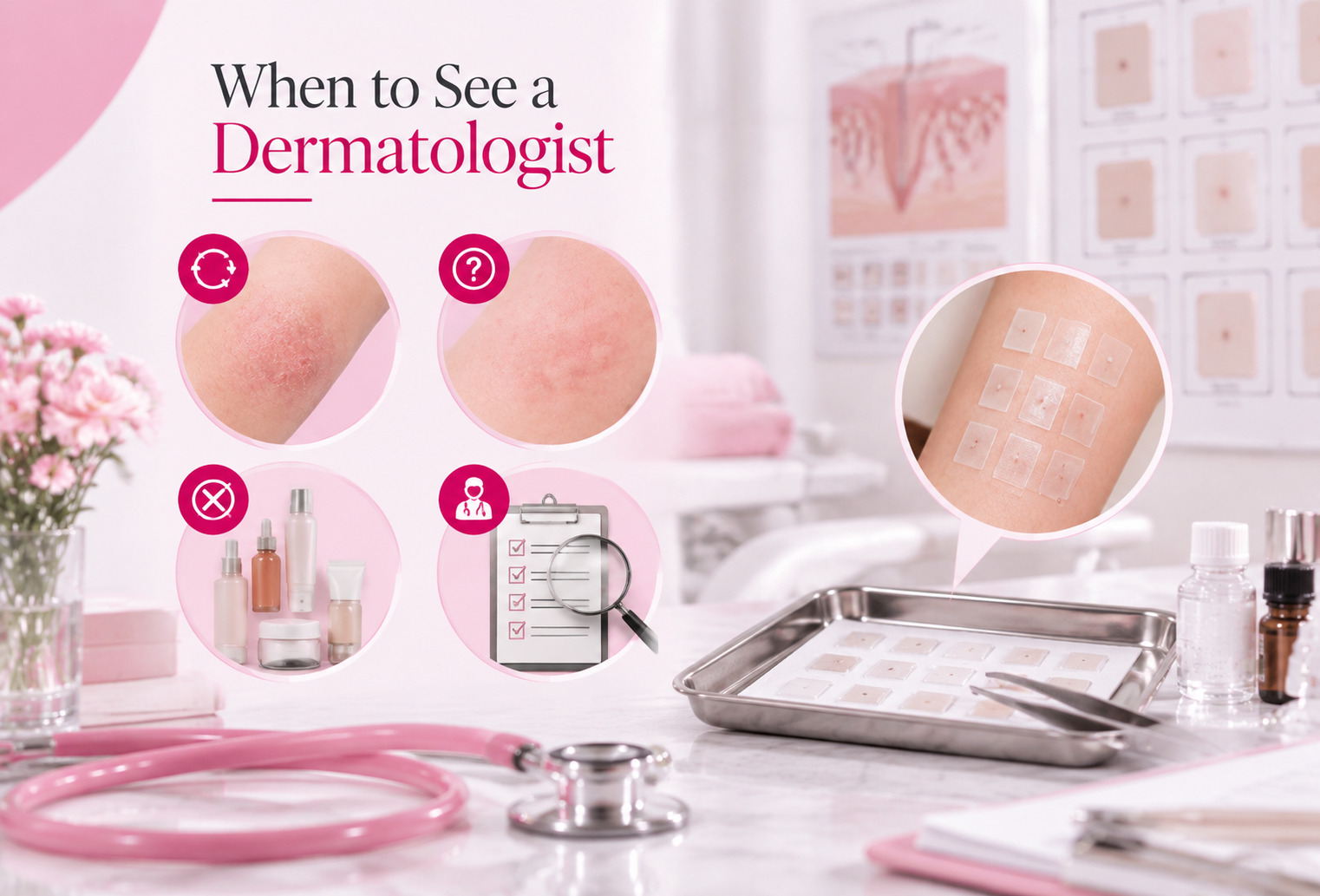
A home patch test is enough for most everyday skincare decisions, but it has limits. Anyone dealing with chronic, recurring contact dermatitis, or who keeps reacting to products without being able to pinpoint the cause, may benefit from a professional patch test instead.
A dermatologist can test a wider panel of allergens under controlled conditions and identify the exact ingredient responsible for the reaction. This type of allergy test is more detailed than an at-home patch test and can help people understand the specific triggers affecting their skin.
Professional testing may be recommended for people whose skin is sensitive, those with recurring skin allergies, or anyone experiencing repeated reactions despite changing products.
How to Choose Products for Sensitive Skin at Sa Sa Malaysia
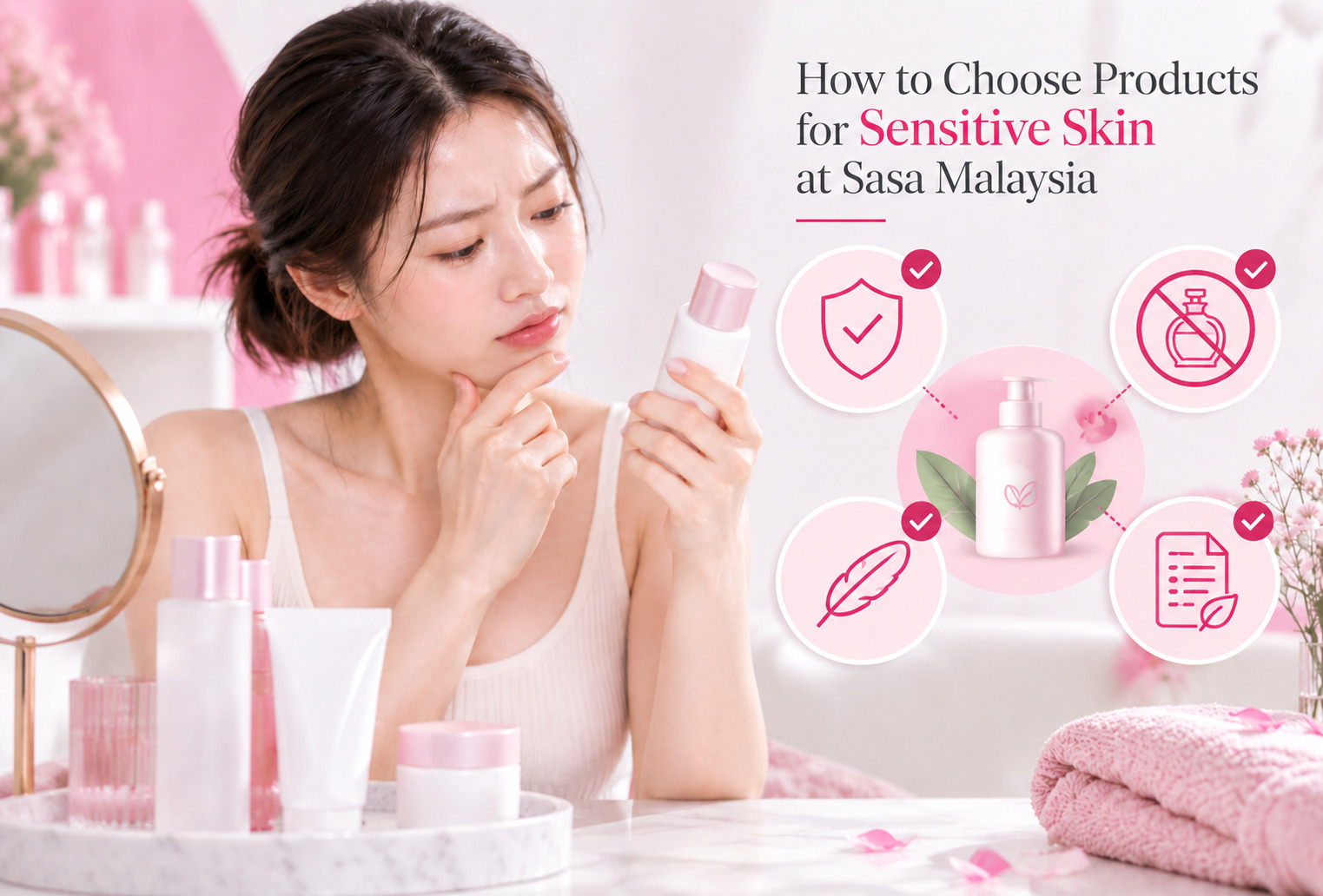
Patch testing is the safest habit to build, but choosing products wisely from the start also helps reduce the chances of irritation. Look out for labels marked hypoallergenic, fragrance-free, or formulated for sensitive skin, as these are generally developed with fewer common irritants.
Understanding your own skin type is also important when selecting a new skin care product. A formula that works well for one person may not work the same way for another because every person’s skin reacts differently.
A shorter ingredient list is usually a good sign, especially for those with sensitive skin. Before adding a new product into your skincare routine, take time to check the ingredients, perform a patch test, and see how your skin tolerates the formula.
Explore our extensive range of dermatologist-tested brands, gentle formulations, and sensitive skin care products by visiting Sa Sa Malaysia's official website. Take advantage of these high-quality, nourishing formulas to choose a new product that perfectly matches your unique skin type without the fear of a skin reaction. Embrace healthy skincare with Sa Sa MY, where the right skincare product becomes a natural part of your everyday routine.
Frequently Asked Questions (FAQs)
1. What is a patch test for skincare?
A patch test for skincare is a simple way to check how your skin reacts to a new product before applying it to your face. It means placing a small amount of the product on a hidden area of skin to see how your skin tolerates it.
2. Why should I patch test before using a new skincare product?
Everyone’s skin is different, and a product that works for someone else may not work for you. Patch testing can help prevent skin irritation and identify ingredients that may cause your skin to react before using the product on your face.
3. How do I perform a patch test at home?
To conduct a patch test, apply a small amount of the product to a hidden area, such as your inner arm or behind your ear. Leave it for 24 to 48 hours and observe if your skin shows any redness, itching, or irritation before you use a cosmetic product.
4. Can skincare products cause allergic reactions?
Yes, some skincare products can cause reactions if your skin does not tolerate certain ingredients. A product may irritate your skin or trigger an allergic reaction, especially if you have allergic skin or sensitive skin.
5. Should I repeat the patch test when trying new products?
Yes, it is a good idea to repeat the patch test whenever you try a new product, especially when using new skin creams or active ingredients. Regular testing helps you understand what works for your skin and supports a healthy skin routine.
Author

Mei Ling Cheng is a seasoned beauty expert with over 15 years of experience in professional makeup artistry and skincare consulting. As a leading beauty advisor at Sa Sa Malaysia, she specialises in enhancing natural beauty through innovative techniques and high-quality products. Her expert recommendations have helped thousands achieve flawless, long-lasting looks with confidence.
Featured Products in this Post

RM 39.00

RM 115.00

RM 89.00
Related Posts

Anti-Aging Skincare Guide Malaysia 2026 | Best Routine & Products | Sa Sa MY

Best Tested Clay Masks For Sticky Skin and Clogged Pores
Skincare Fridge: 6 Beauty Products To Store For Cool Skin Care